- Blow On The Cartridge
- Posts
- Double Dragon II: The Revenge
Double Dragon II: The Revenge
The combat shines, the platforming argues
In partnership with

RETRO NEWS
V’Ball Returns to Modern Consoles After Nearly 35 Years
Technos’ 1988 beach volleyball classic joins Arcade Archives across modern gaming platforms. Read more here
ArcStation Makes PS1 SD Card Loading Easier Without Soldering
The upcoming optical drive emulator promises simple installation and broad PlayStation compatibility. Read more here
UrbX Warriors Champions Physical Games in an Increasingly Digital Industry
The retro inspired adventure embraces physical ownership with new Mega Drive and Amiga editions. Read more here
PRESS START
An Introduction To Today’s Game

Some sequels play it safe. Others tear up the blueprint and start fresh. Double Dragon II: The Revenge falls into the second camp, trading the light RPG mechanics of the first NES game for something leaner and far more aggressive.
Billy and Jimmy Lee return, and for the first time on NES, a second player can jump in without waiting their turn. That alone made this one of the more requested rentals at video stores back in 1990.
Double Dragon remains one of my favorite retro series. Time to jump back in.
BEHIND THE PIXELS
Let’s Dive Into The Game
Picture a side scrolling beat em up where every screen throws two enemies at you at once, and you clear them out before the game lets you move forward. That is the entire shape of Double Dragon II: The Revenge.
Billy and Jimmy Lee punch, kick, and throw their way through nine missions set across a ruined New York, chasing down the Shadow Warriors gang responsible for killing Marian. Yup, they went from kidnapping to murder in this one.
Three difficulty settings shape how much of the story you actually see, with only the hardest unlocking all nine missions and the true ending. It is a strange design choice that ties the ending itself to how much punishment you are willing to take.

The combat obviously carries the game. Every punch and kick has a real sense of weight, and the special moves, a cyclone kick, a hyper uppercut, a flying knee, give both brothers a surprisingly deep toolkit for a 1989 release.
Weapons like chain whips, knives, and steel pipes can be picked up mid fight and used against whoever is left standing.

The directional controls work well for combat. You punch toward the direction you are facing and kick the opposite way, so managing your position matters as much as your timing. Where the game struggles is jumping.
Special moves require a jump followed by a precise button press at the peak of the arc, and later missions lean hard on platforming sections built around disappearing platforms and instant death pits. It is a genuine difficulty spike that has little to do with skill and a lot to do with stiff jump physics.

Two players can fight side by side for the first time in the NES series, which changes the pace considerably. Splitting enemy attention with a partner smooths over some of the rougher platforming stretches, even if it cannot fix them entirely. This series is meant to be played with another, so it’s nice to see it in this version.
Visually, the game holds up better than its reputation suggests, with varied backdrops that range from a moving helicopter to an undersea base. The soundtrack is serviceable rather than memorable, doing its job without leaving much of an impression once the console is off.
Stop making AI decisions in the dark.

Leadership is asking: are we getting value from AI? Which tools are worth the spend? Where are we exposed? Right now, most teams have no idea.
Harmonic Security Usage Explorer changes that.
You get a complete picture of how your organization uses AI, automatically categorized into custom tasks and use cases.
You’ll see the projects being worked on, who’s using what tools, where AI investments are driving value, and where employees are engaging in risky behavior.
CIOs can rationalize spending and cut wasted licenses. CISOs can pinpoint where risk exists and neutralize it. AI committees can show exactly how their efforts are paying off.
GAME INFORMATION
|  |
WHERE TO PLAY
Nintendo Switch Online - NES app.
Original Copies of the Game (All prices in USD)
Loose: $12
Complete: $77
New/Sealed: $485
COVER ART

Build a Holiday Creator Affiliate Program in 90 Days

Creators lock in holiday content calendars 90 days out, before brands figure out commissions. Waiting too long to launch an affiliate program means less runway to build demand and a missed shot at the best partnerships.
The 90-Day Holiday Sprint covers commissions, recruiting, and scaling a program at Day 30, 60, and 90.
GAME OVER
Why You Should Play This
So why play Double Dragon II: The Revenge in 2026? For one, it is easy to access. The game has lived on Nintendo Switch Online's NES app since 2019, and earlier Virtual Console releases mean plenty of players already have a copy sitting in their library somewhere.
For another, the fighting still holds up. Two brothers and a surprisingly generous move list make for a satisfying brawler even before you bring a second player into the mix. Just go in expecting to grumble at a few jumps along the way.

SUPPORT
This is a passion project made with love, and every open or read means the world.
If you’d like to show extra support, you can use the button below.
RETRO HARDWARE
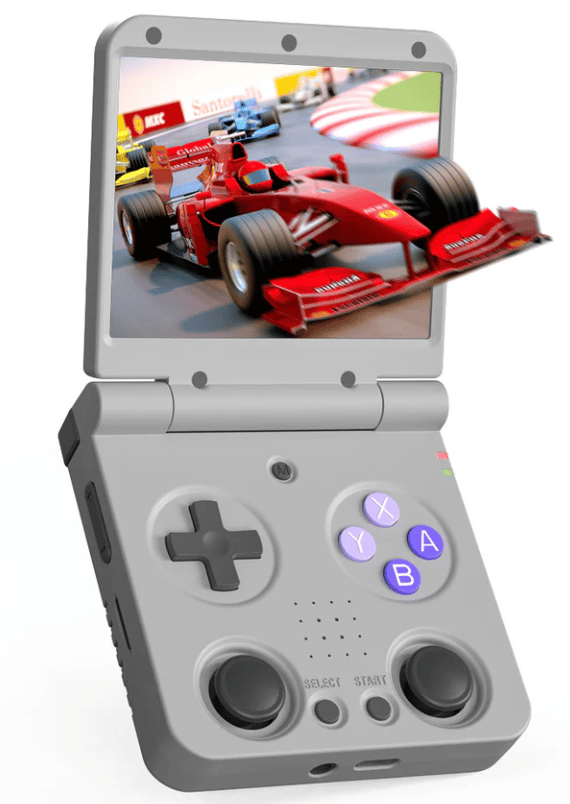
Miyoo Flip V2 Retro Handheld Game Console
The Miyoo Flip V2 is a tiny clamshell retro handheld that lets you carry a whole library of classic games in your pocket. With a bright screen, solid controls, and the nostalgic flip design we all remember, it’s perfect for quick gaming sessions anywhere. Click the picture to check it out. My readers can use the following code for a 12% discount: NY12
Reply