- Blow On The Cartridge
- Posts
- Rastan
Rastan
You have a sword, a loincloth, and a dragon problem.
In partnership with

PRESS START
An Introduction To Today’s Game

Before God of War and Dark Souls, there was Rastan.
Inspired by the brutal fantasy worlds of Conan the Barbarian, Taito's 1987 arcade classic wastes no time.
You step into the sandals of a sword-wielding barbarian, the music erupts, and within seconds you're carving through monsters with a grin on your face.
The premise is simple: battle across six perilous stages filled with mythological beasts before facing a mighty dragon. It doesn't need an elaborate story. The atmosphere, action, and confidence are more than enough.
BEHIND THE PIXELS
Let’s Dive Into The Game
Rastan is a side-scrolling hack-and-slash action game, the kind where you move left to right through a fantasy world, cutting down whatever shows up between you and the end of the level.
Think of it as what might happen if someone looked at Conan the Barbarian and thought, "that should be a video game," because that is more or less exactly what happened.
Taito originally intended to make an official Conan game. Midway through development, they discovered another company already held the license.
So they invented Rastan, a hulking barbarian in a loincloth with an entirely different name and absolutely identical energy. But in doing so, they still kept most of the assets they already created for Conan.

The main character looks like Arnold and even includes a pretty recognizable Atlantean sword from the movie. The game even uses basically the same font as the film’s marketing material, even using a sword within the title, just like the film.
I remember seeing this in the arcades for the first time and instantly saying “It’s Conan!” The first film still remains one of my all time favorites, so this game still holds a soft spot for me.
Weapons are scattered throughout the levels and picked up by hitting them with your current sword.
A mace, an axe, and a fireball-shooting blade are all available, and each has a timer attached. Once the clock runs out, you're back to your starter weapon.
Power-ups like shields and body armor work the same way. The game also throws in cursed items that look identical to health potions until they drain your energy instead.

The six levels each move from an outdoor landscape into a castle interior, ending with a boss fight.
The difficulty builds at an honest pace until it does not, which is to say the later stages are genuinely punishing and ate your quarters back in the day. But this was pretty common for games at the time.
Falling into water kills you immediately regardless of how much health you have. So does getting caught under a descending spiked ceiling.
The final stage cannot be continued if you die there, which means you have to reach it in good condition or start over.

The soundtrack is worth mentioning separately because it is better than it has any right to be.
Composed by Naoto Yagishita and Masahiko Takaki, it shifts tone and tempo with what's happening on screen, behaving more like a film score than a looping arcade theme.
Reviewers in 1987 made that observation, and it still lands the same way today.
Watch every match the way it was meant to sound.

This summer, 48 nations play. For a lot of fans in the US, the match doesn't feel right in the wrong language. The commentary, the energy, the way goals sound when your language is calling them.
Norton Neo is a free browser with a free built-in VPN. Stream privately in the language you want. No subscription, no sign-up, no credit card. Built-in VPN, anti-fingerprinting, and ad blocking, all backed by Norton security.
Free to download. Free to use.
Fast. Safe. Intelligent. That's Neo..
GAME INFORMATION
|  |
WHERE TO PLAY
Arcade Archives released a port in 2024 for modern consoles.
The game can also be found in Taito Milestones 3 on the Switch.
COVER ART

The #1 Time-Series Database Built on Postgres.

Columnar storage. No split architecture. No new query language. TimescaleDB extends Postgres with hypertables, Hypercore compression, and continuous aggregates so analytics run on live data.
CERN uses it to handle sensor data from the Large Hadron Collider.
One database. No pipeline.
GAME OVER
Why You Should Play This
The Arcade Archives release from Hamster Corporation put Rastan back into circulation in May 2024, available on Nintendo Switch and PlayStation 4 for $7.99.
It uses the Japanese ROM, includes adjustable difficulty, and adds online leaderboards if that sort of thing appeals to you.
Taito Milestones 3, released in December 2024 on Switch, bundles the full Rastan trilogy with nine other Taito classics for $39.99. Expensive for what you get, but I thought it was worth mentioning if you don’t want to mess with emulation.
The reason to play Rastan today is not purely historical. The atmosphere holds up (especially if you’re a Conan fan) and really sells you on the game right away. It remains one of my favorite arcade games because of it.
It is also short enough that a session takes maybe thirty minutes, assuming the dragon cooperates. It probably will not, but that's the deal you made when you picked up the sword.

SUPPORT
This is a passion project made with love, and every open or read means the world.
If you’d like to show extra support, you can use the button below.
RETRO HARDWARE
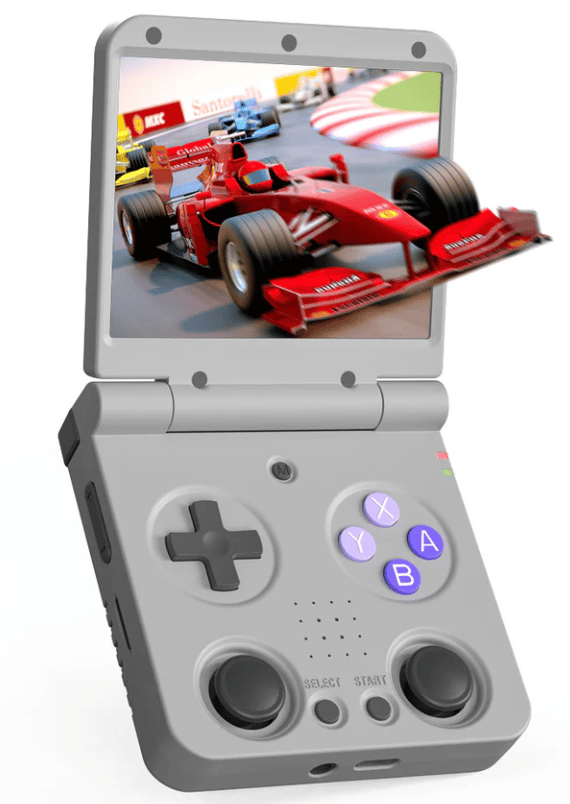
Miyoo Flip V2 Retro Handheld Game Console
The Miyoo Flip V2 is a tiny clamshell retro handheld that lets you carry a whole library of classic games in your pocket. With a bright screen, solid controls, and the nostalgic flip design we all remember, it’s perfect for quick gaming sessions anywhere. Click the picture to check it out. My readers can use the following code for a 12% discount: NY12
Reply