- Blow On The Cartridge
- Posts
- Sea Trader: Rise of Taipan
Sea Trader: Rise of Taipan
Tavern gossip and cannonballs.
In partnership with

RETRO NEWS
Halloween is over. But Turkey Day Mashed Potatoes Day is coming!
Apologies for missing yesterday’s date and being a day late. My other jobs had some long nights and a few migraines to go along with it.
Today's retro news brings us two big announcements from Polymega and a particularly gruesome blast from the past.
Polymega is expanding its hardware support with a new $99 adapter set that will let players use original Sega Master System, Mark III, and Game Gear cartridges, with shipping planned for February 2027.
The company has also announced its 23rd game collection, this time celebrating Jaleco with seven classics, including City Connection, Rod Land, Scud Hammer, and Game Tengoku.
Meanwhile, the very M-rated 1992 Japanese PC-98 horror adventure Dead of the Brain has finally arrived on Steam with its first official English translation. The game combines point-and-click exploration, zombies, and enough pixelated blood to make even the most hardened horror fan raise an eyebrow. Better late than dead!
Polymega Expands Sega Support With Master System, Mark III and Game Gear
A new $99 adapter set brings classic Sega cartridges to Polymega in February 2027. Read more here...
Polymega Announces Seven Game Jaleco Collection Featuring City Connection and Rod Land
The upcoming compilation includes Scud Hammer, Game Tengoku, and other forgotten arcade favorites. Read more here...
Forgotten 1992 Japanese Horror Game Dead of the Brain Finally Arrives on Steam
The gruesome PC-98 adventure receives its first official English translation, complete with zombies. Read more here...
PRESS START
An Introduction To Today’s Game

I've been watching the amazing Black Sails lately. A show from about ten years ago that is a prequel to the classic Treasure Island. Great writing, acting, treasure, pirates, ship battles and the badass, Captain Vane. It’s hit the spot and something I’d recommend to everyone to check out.
Naturally, it's put me in the mood for a good pirate game. Something with ships, treasure, dangerous waters, and the occasional questionable decision. So I went digging through the Game Boy Advance library and came across Sea Trader: Rise of Taipan. It seemed like the perfect fit.
Released by Jaleco in North America in December 2002, Sea Trader puts you in command of a ship sailing between ports, buying and selling goods, and trying to build a trading empire. There are pirates, storms, and plenty of opportunities to lose everything, but instead of sword fights and buried treasure, you'll spend most of your time worrying about the price of tea. Not exactly the pirate adventure I had in mind.
Still, there's something appealing about making a fortune on the high seas, even if it involves a little more bookkeeping than expected. So grab your sea legs, keep an eye out for pirates, and let's set sail.
BEHIND THE PIXELS
Let’s Dive Into The Game
Sea Trader: Rise of Taipan is a trading simulation that puts you in charge of a ship and sends you off to make your fortune. The idea is simple. Buy goods where they are cheap, sail somewhere else, and sell them for a profit.
You can choose to play for one, five, or ten in-game years, giving yourself plenty of time to become a wealthy merchant or discover that you are absolutely terrible at business.
With more than 40 cities spread across six regions, there are plenty of opportunities to make money, lose money, and wonder why you bought an entire shipload of groceries.

Of course, there is more to running a trading empire than buying low and selling high. Prices fluctuate, certain goods are only available in specific regions, and the markets deal in everything from everyday supplies to illegal contraband.
Each port has its own little economy to explore, with taverns offering gossip, banks providing loans, and shipyards selling upgrades to keep your vessel afloat. You can even rent warehouses to store your merchandise, although some come with unwanted guests like rats and thieves.
Apparently, even in the age of sailing ships, finding a decent storage unit was a nightmare. And if you want to get into smuggling, you will need to build a reputation and grease a few palms at the customs office.

Life at sea is not exactly a relaxing cruise either. Pirates can attack, storms can damage your ship, and shallow reefs are waiting to ruin your day.
You will also encounter merchant and military vessels, giving you opportunities to trade, fight, or even turn to piracy yourself. Nothing says successful businessman quite like robbing the competition.
The interesting part is that all of this happens through menus. There is no steering your ship or firing cannons in real time. Every encounter comes down to the choices you make, which means you have nobody to blame but yourself when your brilliant business strategy ends with your ship at the bottom of the ocean.

Visually, Sea Trader keeps things simple, with nicely illustrated maps and cutscenes that have a charming, slightly campy comic book look.
There is not much animation, and the soundtrack mostly consists of gentle melodies and little sound effects as you move between ports. It is certainly not the most exciting game to watch someone play, but that is part of its appeal.
The fun comes from watching your fortune grow, figuring out profitable routes, and taking the occasional ridiculous gamble. It is basically a spreadsheet with cannons attached, and somehow that works.
Analytics on Live Data Without Leaving Postgres

When analytics on Postgres slows down, most teams add a second database. Then come the pipelines, the sync jobs, and a copy of your data that's always a little behind.
TimescaleDB takes a different approach: extend Postgres instead of splitting away from it. Hypertables partition your data automatically as volume grows. Hypercore compression cuts storage up to 95%. Continuous aggregates keep dashboards live without re-querying everything.
CERN runs Postgres this way for sensor data from the Large Hadron Collider.
No split architecture, no pipeline lag, no new query language to learn. Same SQL, same drivers, same tools.
Start on Tiger Cloud and get $1000 in credits.
GAME INFORMATION
|  |
WHERE TO PLAY
The original copy will be your best bet in playing this.
Original Copies of the Game (All prices in USD)
Loose: $25
Complete: $50
New/Sealed: $90
COVER ART


TLDR AI is a free daily email curated by Anthropic and ex-Google engineers: the new tools worth trying and the research worth understanding, summarized for 1.1M+ readers.
GAME OVER
Why You Should Play This
So why bother setting sail with Sea Trader today? Because it offers something a little different from the usual Game Boy Advance library. While everyone else was saving princesses, collecting monsters, or jumping on enemies, this game was asking whether you wanted to invest your life savings in a cargo hold full of questionable merchandise. Sometimes a change of pace is exactly what you need.
Reviews back in 2003 were mixed but generally appreciated what the game was trying to do. Critics praised its addictive trading mechanics while pointing out the limited presentation and lack of action. GameSpot considered it a refreshing change of pace for handheld gaming, and its 68 Metacritic score reflects a game that was not for everyone. Fans of the old computer game Taipan will probably recognize the formula, and there is something satisfying about watching a small investment turn into a fortune.
Sea Trader: Rise of Taipan was only released in North America, and with no modern rerelease, the original GBA cartridge remains the way to experience it on its intended hardware. If you enjoy planning routes, playing the markets, and occasionally gambling everything on a risky voyage, there is a surprisingly enjoyable little game here. Just remember that the goal is to become a wealthy trading magnate, not the proud owner of six sunken ships and a mountain of debt.

SUPPORT
This is a passion project made with love, and every open or read means the world.
If you’d like to show extra support, you can use the button below.
RETRO HARDWARE
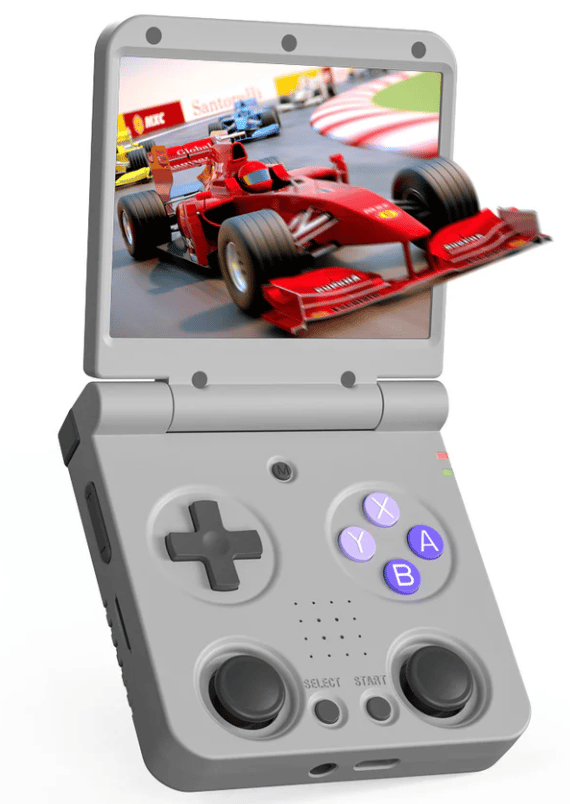
Miyoo Flip V2 Retro Handheld Game Console
The Miyoo Flip V2 is a tiny clamshell retro handheld that lets you carry a whole library of classic games in your pocket. With a bright screen, solid controls, and the nostalgic flip design we all remember, it’s perfect for quick gaming sessions anywhere. Click the picture to check it out. My readers can use the following code for a 12% discount: NY12
Reply