- Blow On The Cartridge
- Posts
- SimEarth
SimEarth
Will Wright's forgotten experiment in planetary management
Sponsored by

PRESS START
An Introduction To Today’s Game

Remember when Maxis thought players wanted to manage an entire planet's evolution over 10 billion years?
SimCity for the SNES took up a lot of my time. The city builder just hit a nerve and started a life long love of simulation games. So when SimEarth came out, I had to play it.
SimEarth arrived on SNES in 1991, ready to make you feel simultaneously powerful and completely lost. Created by Will Wright and based on scientist James Lovelock's Gaia hypothesis, this wasn't your typical SNES fare.
While other kids were saving Princess Peach, you were adjusting atmospheric oxygen percentages to three decimal places and wondering why your bacteria refused to evolve past stage two. Fun!
The game came with ambitions bigger than its cartridge could handle, a manual thicker than most textbooks, and absolutely zero hand-holding. You weren't building a city anymore. You were playing god, and god apparently needed a degree in earth sciences.
BEHIND THE PIXELS
Let’s Dive Into The Game
SimEarth casts you as a planetary deity responsible for nurturing a world from barren rock to spacefaring civilization. It's a life simulation game where you manipulate temperature, atmosphere, landmasses, and oceans to support evolving lifeforms.
Think of it as gardening, except your garden is an entire planet and your plants might develop nuclear weapons. We’re not far away from that in real life…
The game offers eight preset scenarios including Earth, Mars, and Venus, plus random planet generation. Your ultimate goal is achieving Exodus, where your civilization advances enough to leave the planet and colonize the stars.

Getting there requires shepherding life through multiple evolutionary stages, from single-celled organisms like prokaryotes to sentient species capable of building cities.
Every action costs energy, measured in omega units. You start with a limited budget that slowly regenerates.
Raising terrain costs 50 units, placing a monolith costs more, and careless spending leaves you watching helplessly as your carefully balanced ecosystem collapses.
The difficulty level determines your energy cap, with experimental mode offering unlimited resources for those who just want to experiment without consequences.

The interface operates through layered menus displaying everything from continental drift rates to mutation percentages.
You can trigger volcanoes, meteor strikes, and ice ages. You can place different lifeforms manually or let evolution handle the work. The Gaia model means everything connects, atmospheric changes affect temperature, temperature affects ocean levels, oceans affect rainfall, and rainfall determines where forests grow. Change one variable carelessly and watch the dominoes fall.
Species evolve or go extinct based on environmental conditions you create. Mass extinctions happen, sometimes for no apparent reason. A thriving dinosaur population might vanish overnight while carnivorous plants inexplicably flourish.
The game simulates billions of years in compressed time, meaning patience becomes your most valuable resource after omega units.

Graphics show a simplified top-down view with color-coded terrain and tiny sprites representing lifeforms. The presentation is functional rather than beautiful, relying heavily on data displays and charts. It’s pretty basic overall and won’t impress many.
Audio consists of ambient background music that fits the cosmic scale without being memorable. The SNES version uses a controller instead of mouse and keyboard, making menu navigation less intuitive than the PC original.
Catch Bad Actors. Let Good Users Flow.

When your goal is to increase the difficulty of online attacks, the advanced features of hCaptcha Enterprise is the most robust solution.
Take it from one of our customers:
“Compared to last year [when using competitor], we had a 96% reduction in bot throughput.” - Top 10 Gaming Company
Category leaders in every industry have been switching to hCaptcha because of the robustness and durability of our detection and deterrence solutions.
Virtually all companies that book a demo decide to move forward.
GAME INFORMATION
|  |
WHERE TO PLAY
The original copy or emulation will be your best bet in playing the original version.
Original Copies of the Game (All prices in USD)
Loose: $11
Complete: $35
New/Sealed: $80
COVER ART

Heavy Machinery Hasn't Changed in 100 Years. Until Now.

Every bulldozer, crane, and military vehicle on earth still runs on hydraulic fluid invented before your grandparents were born. RISE Robotics is the company finally replacing it with a patented electric system already trusted by the U.S. Air Force.
GAME OVER
Why You Should Play This
SimEarth deserves recognition for sheer ambition. Few games attempt to simulate planetary evolution with this level of scientific grounding, and even fewer succeed at making complex systems feel interconnected and responsive.
But let's be honest about what you're getting. This is a game that respects your intelligence while punishing your impatience. The learning curve is vertical, the feedback is often unclear, and success requires either reading that hefty manual or accepting lots of failed planets. If you approach it as an educational tool or meditative experiment, it delivers. If you want traditional gameplay with clear objectives and immediate rewards, look elsewhere.
It's best suited for patient players curious about earth sciences or simulation mechanics. Anyone who gets excited about adjusting variables and observing long-term results will find something special here. Everyone else will probably create one volcano too many, watch their atmosphere burn off, and go play something with more immediate gratification. And honestly, both responses are completely valid.

SUPPORT
This is a passion project made with love, and every open or read means the world.
If you’d like to show extra support, you can use the button below.
RETRO HARDWARE
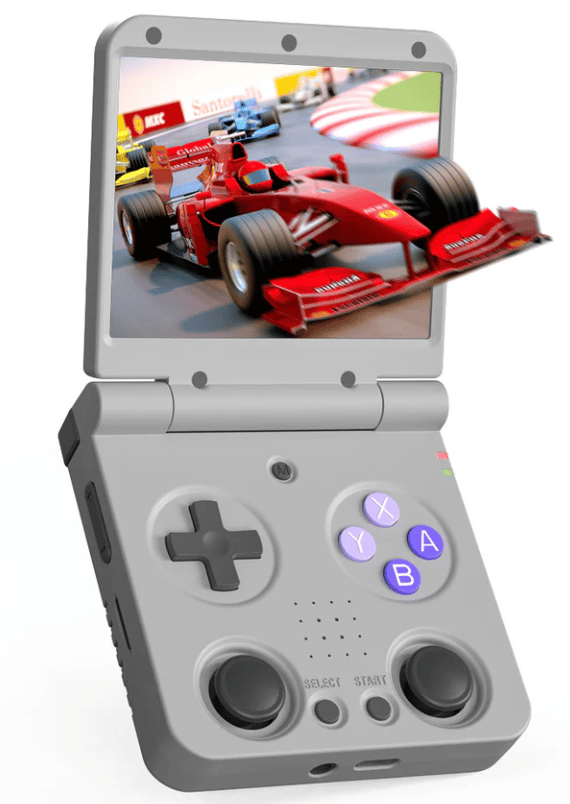
Miyoo Flip V2 Retro Handheld Game Console
The Miyoo Flip V2 is a tiny clamshell retro handheld that lets you carry a whole library of classic games in your pocket. With a bright screen, solid controls, and the nostalgic flip design we all remember, it’s perfect for quick gaming sessions anywhere. Click the picture to check it out. My readers can use the following code for a 12% discount: NY12
Reply